Review: Cybersecurity Research Day NRW 2026
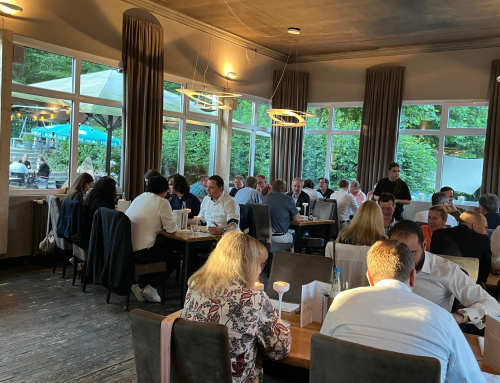
On 30 April, the Cybersecurity Research Day NRW took place for the second time. Around 50 representatives from academia, politics and industry gathered at the Centre for the Engineering of Smarter Product-Service Systems (ZESS) in Bochum to discuss current developments, research approaches and challenges in IT security.
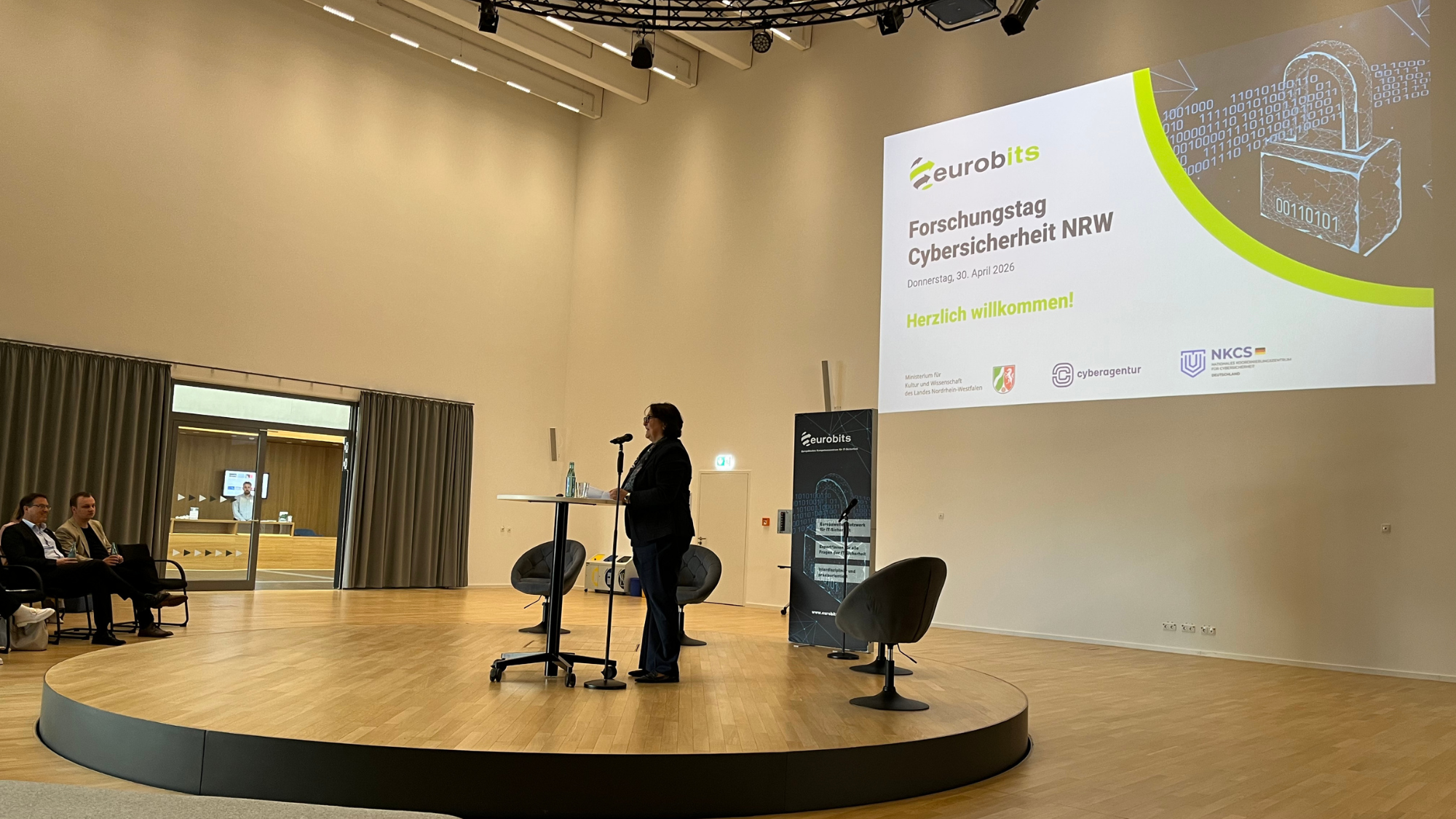
Following a welcome address by our Chairwoman Christine Skropke, Prof. Dr Andrea Kienle, Head of the Research Department at the Ministry of Culture and Science (MKW), opened the event.
This was followed by the first keynote presentation by Sabine Puch (DLR Project Management Agency) on the topic of ‘Safeguarding Science’. It became clear that research security has long since become a strategic management issue for universities and research institutions. The focus was on the growing complexity of international collaborations and the need to continuously refine internal processes in order to create a secure environment for excellent research, teaching and collaboration.
The subsequent panel discussion, featuring Prof. Dr Andrea Kienle, Sabine Puch and Prof. Dr Veelasha Moonsamy, and moderated by Christine Skropke, explored these issues in greater depth with the active participation of the audience. This led to a lively exchange of experiences amongst all those involved. A key topic of discussion was the introduction of the mandatory CISO role at all universities in North Rhine-Westphalia, which the experts regarded as an important step towards strengthening research security. Despite existing challenges, the overall conclusion was positive: North Rhine-Westphalia is on the right track.
Another focus of the Research Day was on forward-looking ideas and current research projects from academia and industry. The programme included the following specialist presentations, amongst others:
- “Towards secure and privacy-friendly embedded devices”
Prof. Dr Veelasha Moonsamy (Horst Görtz Institute for IT Security / Ruhr University Bochum) provided insights into her research at the Chair of Security andPrivacy of Ubiquitous Systems within the Faculty of Computer Science. The focus was on the analysis, securing and enhancing the resilience of software and hardware systems in networked infrastructures. The aim is to identify security vulnerabilities at an early stage and to embed data protection mechanisms right from the system design phase. - “Trustpoint – Secure digital identities for industry”
Prof. Dr Jan Pelzl from Hamm-Lippstadt University of Applied Sciences presented the “Trustpoint” research project. The aim of the project is to develop an open-source solution for the secure provision and management of machine identities throughout their entire lifecycle. He also provided an overview of the innovative “Human Cyber Security” degree programme, which, from the 2027/28 winter semester onwards, will focus on the design of technical and behavioural science-based solutions that improve security systems and the desired security behaviour of individuals, and which can be applied in practice. - „KMU.kompetent.sicher.“
Tim Brinkmeier from the University of Paderborn used the “KMU.kompetent.sicher.” funded project to demonstrate how scientific findings can be successfully transferred into practice. Building on experience gained from previous projects, a low-threshold IT security training programme is being developed for employees of small and medium-sized enterprises, with the aim of implementing the requirements of the NIS 2 Directive in a practical manner. - “The Fast and the Curious: Data Collection and Tracking Practices on the Internet”
Prof. Dr.-Ing. Tobias Urban from the Institute for Internet Security (if(is)) at Westphalian University of Applied Sciences vividly illustrated the urgent need for action in the field of data protection. In addition to explaining how modern tracking practices work, he presented research findings on serious security vulnerabilities, including unencrypted data transmissions in nursery apps. - “Applied OT Security Research: Practical Experience from KRITIS Sectors in Rail and Energy”
Ali Recai Yekta from our eurobits member company Yekta IT provided insights into the many years of OT security research carried out as part of the BMFTR-funded FINESSE research project. His technical presentation focused on how modern vehicle and rail systems can be attacked, but above all on how to detect such attacks and protect against them. For the energy sector, Yekta IT also demonstrated how cyber emergency drills can be carried out using realistic OT demonstrators without putting live systems at risk.
In addition, the German National Cyber Security Coordination Centre (NKCS) provided information on current funding opportunities at European level under the Horizon Europe programme.
The wide-ranging presentations and discussions offered fascinating insights into current research projects, new challenges and practical solutions. The open exchange between participants was particularly valuable, giving rise to new perspectives, contacts and ideas.
We would like to thank all those present for their contributions and the positive feedback on the Cybersecurity Research Day NRW 2026. Plans are already underway to hold a follow-up event next year.
Photos: ©ZESS / eurobits
The event’s supporting partners and active contributors were:
Ministry of Culture and Science (MKW)
Agency for Innovation in Cybersecurity (Cyber Agency)
National Coordination Centre for Cybersecurity Germany (NKCS)